
What goes through one’s mind as they are experiencing a change in perspective? Are there certain steps that one must take in order to think differently? One of my best friends challenged me with new thought and ideas that I am going to be sharing with you in this blog, today.
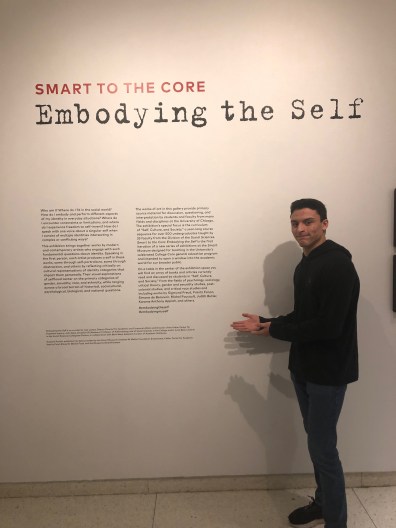
I went to the Smart Museum of Art at the University of Chicago with the Williams family on May 4th, 2019. It was a sunny day and a pretty cold one in fact, but I was excited to go see this exhibit and really try and write a good SAMO to end off senior year. Mr. Williams drove all of us down from Northbrook to the University in about 35-40 minutes. It was free parking as well as free admission into the exhibit, so if you do not want to spend any money whatsoever, then this is the perfect place to do your SAMO!
Immediately as we entered the exhibit, the first thing that caught my eye was the “Lynch Fragments”, by Melvin Edwards. For some reason, I had this feeling that I saw this piece somewhere before. Then, it hit me, because I saw this at the Museum of Contemporary Art with a friend of mine earlier this semester for a potential SAMO.
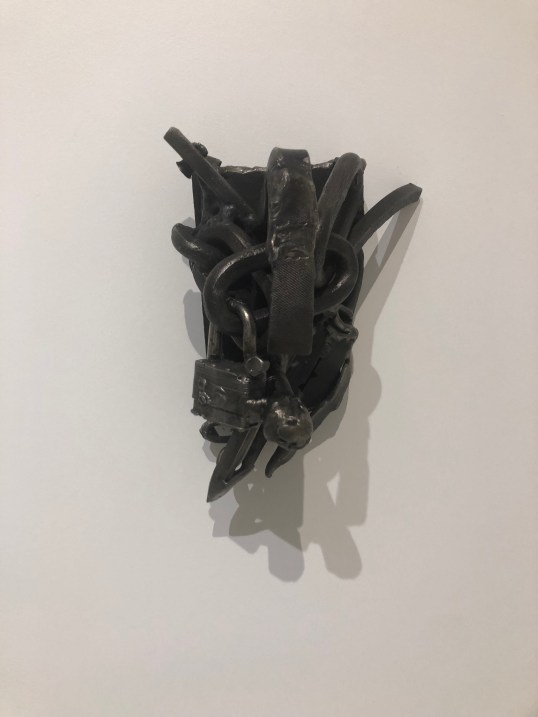
During the time when Edwards made this piece of art, the 1960s, African Americans were facing discrimination and segregation laws that made it difficult for equality to take place in the American society. It was his response to the violence, that he made the fragments in order to show what exactly White Americans did to Blacks to strike fear into their hearts and show their “superiority” over the “inferior” race. It’s amazing how pieces of metal can have so much meaning, and draw out so many emotions and memories from times of pain and suffering that we all can feel and sadly imagine the experiences people went through at that time.

There was something that I definitely felt and learned as I went through the exhibit: Visual art has a powerful and chilling effect, where it can draw out emotions that makes you seek understanding and different perspectives that you never may have thought before. Kevin Beasley, an American artist in the mid-1980s, used very simple, maybe to some people, unappealing objects, and turned them into something beautiful, giving the audience a different way to look at these things and make the viewers think differently in a positive way. Beasley created “Vine” in 2016, a piece that was made with old grungy t-shirts and baseball hats. When I looked from afar, I didn’t notice that these objects were used in the artwork, but as I got closer, I was very interested in it because I found it so fascinating that he used something that I would never have used in art, and transformed it into a masterpiece.
Now, this next one is something that I, personally, am not so proud of. Jennie C. Jones created “SHHH #6” in 2012, and it consisted of a noise-canceling instrument cable, wire, and felt. As Elise and I looked at this piece of art, we thought that it represented a noose that was used to hang African Americans back in the day when it was popular to hang them for pleasure in White communities. Kyle kept telling us that it could also represent a treble clef, a type of symbol that indicates the range of notes on the scale. For some reason, Elise and I didn’t want to take that into consideration and we couldn’t see where he was possibly coming from, but when he told us to come to where he was standing on the side in a slanted view, it became clear that he saw something that we didn’t.

I was very surprised to see that it looked very similar to the treble clef in music, and was very ashamed that I was so stuck in my own mind that I didn’t realize that there could be multiple ways of looking at one piece of work, and everyone thinks a little bit differently. I didn’t even think about what it would be like if someone literally states, “Dude, you’re wrong”. In today’s society, we are so stuck in our own ways of thinking, and we aren’t willing to be disturbed and change our own perspective. After this, I began to think that it’s imperative that we all make an effort to understand each other and not just brush each other off when we don’t see eye to eye.
Ever since the exhibit, I’ve been reminiscing about the old SAMOs that I have done for this class, and it amazes me how each and every one of them has taught me this very important lesson: There always is something to learn and to take in from the work of others. Each time, I have gone with friends or family members that challenged my close-minded thinking and made me see the multiple beauties of artwork from many different time periods and types of people. SAMOs are amazing experiences that I would definitely recommend to prospective CST English students, and I wouldn’t want that to change.
Thank you, Mrs. Galson, for making this year a very difficult, yet interesting experience for all of us. You molded me into a better version of myself and challenged me to think outside of my comfort zone and use my imagination and deeper thinking in order to make these blogs.
Signing off,
Christopher





 Chris's CST Blog